
blog
How to Choose a High Quality Replica Watch: A Practical Buyer’s Guide
Apr
For anyone exploring mechanical watches, one question appears again and again: how do you actually tell the difference between an average watch and a well-made one? While appearance plays a role, experienced collectors focus on deeper factors such as movement stability, finishing quality, and long-term reliability.
This guide breaks down the essential elements that define a high-quality watch. Instead of marketing claims, it focuses on what you can realistically observe and evaluate when comparing different options.
Understanding Movement Quality
The movement is the foundation of any mechanical watch. It controls timekeeping, consistency, and durability. While two watches may look similar externally, their internal construction can be very different.
When evaluating a movement, pay attention to how smoothly it operates. A well-built automatic movement should wind efficiently, maintain stable time, and avoid irregular behavior such as sudden jumps or inconsistent ticking.
Collectors often value movements that maintain consistent daily variation rather than chasing perfect accuracy. Stability over time is far more important than short-term precision.
Case Construction and Finishing
Beyond the movement, the quality of the case significantly affects both durability and appearance. A well-constructed case should feel solid, balanced, and carefully finished.
- Edges should be clean without sharp or uneven transitions
- Brushed and polished surfaces should be consistent
- The case should align perfectly with the bracelet
These small details often indicate the overall level of craftsmanship involved in production.
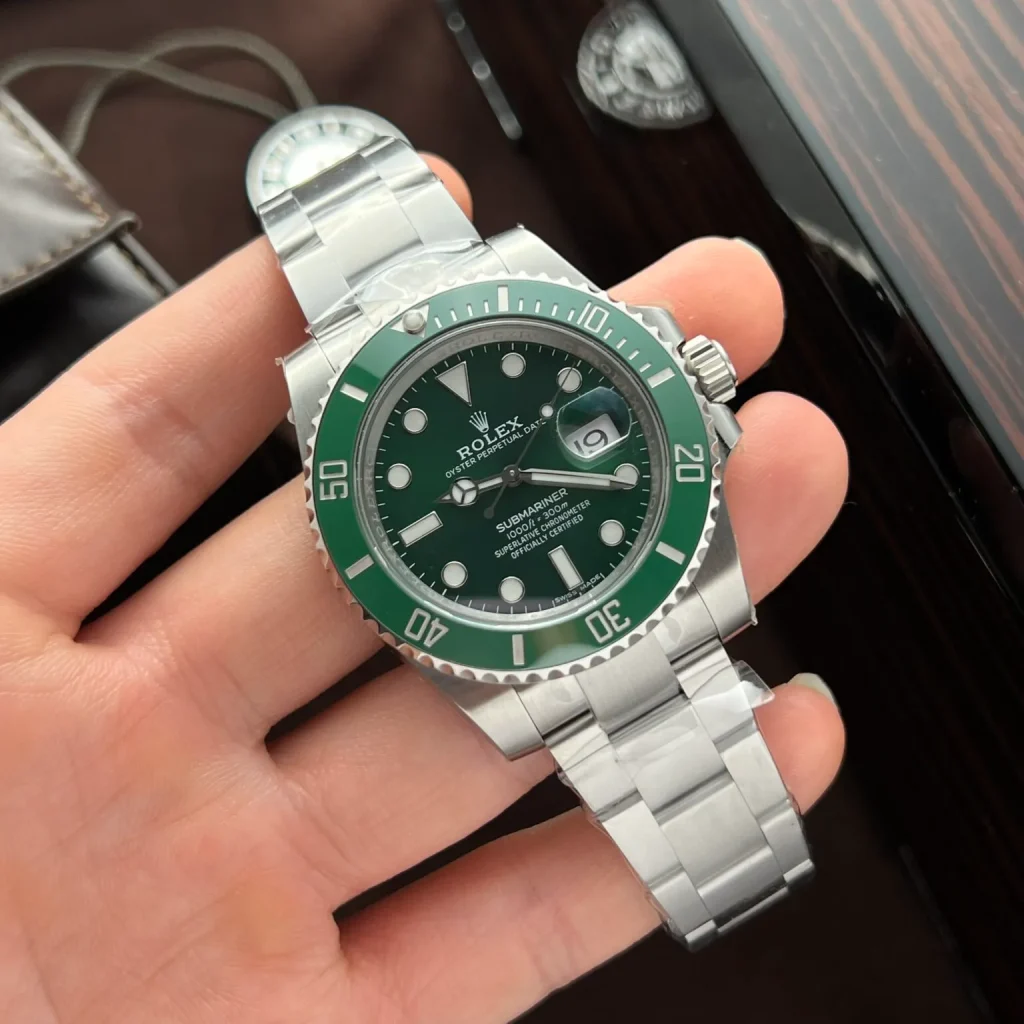
Dial Accuracy and Visual Details
The dial is where most visual differences become noticeable. Even minor imperfections can stand out once you start paying attention.
- Markers should be evenly aligned
- Text should be sharp and not blurred
- Lume application should be consistent
- Hands should be centered and balanced
Experienced enthusiasts often judge a watch within seconds by observing these details.
Bracelet Comfort and Wearability
A watch may look impressive, but if it does not feel comfortable, it quickly loses its appeal. Bracelet construction plays a major role in everyday usability.
High-quality bracelets should feel smooth, flexible, and secure. There should be no excessive rattling or stiffness, and the clasp should operate with confidence.
Comparing Different Quality Levels
Not all watches are built to the same standard. Some focus purely on visual similarity, while others attempt to replicate both appearance and mechanical structure.
In general, higher-quality watches offer:
- Better movement consistency
- More refined finishing
- Improved long-term durability
- Greater overall balance between design and function
These differences become more noticeable over time rather than immediately.
Why Details Matter More Over Time
At first glance, many watches may appear similar. However, after weeks or months of use, differences in build quality begin to show. Smooth operation, stable performance, and comfortable wear all contribute to a better long-term experience.
This is why experienced buyers tend to focus on construction rather than just appearance.
Learning More About Watch Construction
If you want to explore more about watch design, materials, and movement structures, you can find additional insights and examples at this detailed watch resource.
Understanding these fundamentals makes it much easier to evaluate watches with confidence.
Frequently Asked Questions
Are mechanical watches accurate?
Mechanical watches are generally less precise than quartz watches, but a well-made movement should maintain consistent performance.
How long do mechanical watches last?
With proper maintenance, many mechanical watches can last for years or even decades.
Do all watches require servicing?
Yes. Over time, lubrication inside the movement degrades, and periodic servicing helps maintain performance.
Final Thoughts
Choosing a watch is not just about design — it is about understanding how different components work together. By focusing on movement quality, finishing, and long-term usability, you can make far more informed decisions.
For many enthusiasts, this deeper understanding is what transforms a watch from a simple accessory into something much more meaningful.
